Mike’s grief over Laurie
Cry MachoMike Milo’s grief over Laurie, his daughter and only child, remains an active force in his understanding of attachment, loss, and masculine courage. Her death is not only a bereavement he recalls: it becomes the measure by which he confronts a boy’s questions about children and reconsiders the violence he once accepted as heroic.
The question of children
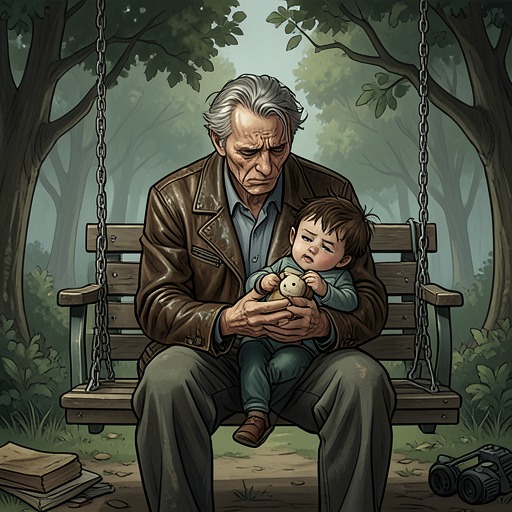
When Mike Milo tells Rafo that he and his former partner had one child and that she died, Rafo responds with solemnity. The exchange turns to whether Mike likes children. His quick answer—that perhaps he should not have had his child—gives way to a more searching inward reckoning. What seems like a simple question proves difficult because any straightforward answer would conceal the losses that have shaped his experience.
Mike remembers having once told Laurie not to ask simple questions. He now recognizes that his irritation had not been confined to questions he considered foolish: simple questions troubled him because he could not answer them honestly to himself. The thought of whether he likes children opens onto the possibility of loss. Children grow up or grow distant; communication fails; they disappear from the moment when he might finally have something to say. The reflection culminates in the fact of Laurie’s death, which makes the question personal rather than abstract.
His spoken denial that he likes children sits uneasily beside this meditation. Mike wonders why Rafo appears astonished, and whether the boy believes that Mexicans are invariably tender toward children, despite his own experience of cruelty and neglect. He also considers whether Rafo is surprised because Mike seems to like him. Mike concludes that he has given the boy no such indication. The moment therefore reveals both his guardedness and the gap between the care he may feel and what he permits another person to see.
Grief and the idea of revenge
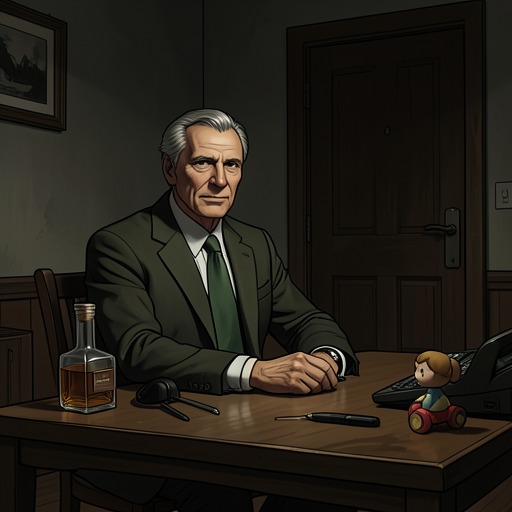
Later, Mike Milo considers the possibility that cruelty grows from loneliness or a desire for revenge, then turns the thought around: perhaps cruelty itself produces loneliness. Laurie’s death is the one loss he identifies with a genuine wish to retaliate against life. He acknowledges that, in the wake of her death, he could have killed, though the reflection does not specify a target or describe an act of violence.
Instead, he imagines revenge as directed not against another person but against death itself. In this formulation, the hero confronts death and claims courage by repeatedly asserting mastery over it. The macho pose is thus not simply confidence: Mike sees how it can conceal grief and fear, turning the wish to resist death into an appetite for domination and killing.
Arenas and the contradiction of courage
Mike’s reflection on Laurie’s death sharpens his misgivings about arenas. He connects the attempt to prove oneself unafraid with the domination of animals and the matador’s killing of a bull. The arena’s promise of heroism comes under suspicion: what looks like courage may also be cruelty directed outward, toward other people and animals, instead of toward the fact of death that cannot be mastered.
The sight of a dead rooster makes this conflict immediate. Mike regards the practices and spectatorship surrounding animal combat as evidence of a wider culture of cruelty, in which an arena can function like a temple. His grief gives the critique a personal origin, but it does not resolve his attachment to the arena’s ideals. He recognizes the violence in them while remaining drawn to the promise of proving himself.
The wound’s continuing force
Mike Milo describes the first half of his life as given to arenas and admits that he would gladly give the second half to them as well. He is grieving not only Laurie but also the sense that nobody wants him anymore; he compares himself to a gamecock left without a place in the contest. The image joins bereavement to professional and personal obsolescence, without suggesting that one has replaced the other.
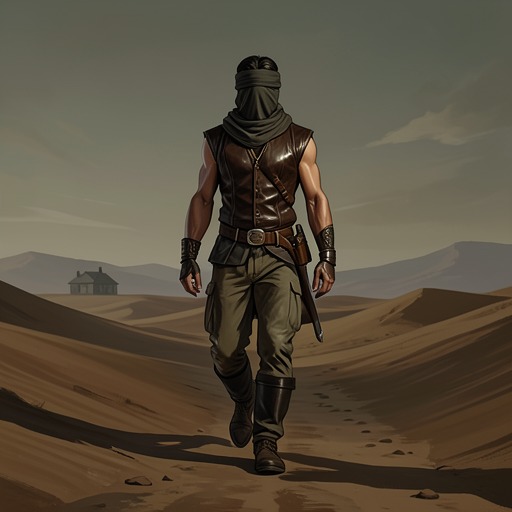
Even so, he imagines breaking a few wild horses and earning enough money to leave. The plan preserves a form of the macho identity he has begun to question: he still seeks mastery and a way out, even as he recognizes the cruelty bound up with domination. Laurie’s death therefore remains unresolved in these passages. It interrupts his evasions, informs his understanding of violence, and leaves him caught between condemning the arena and wanting to return to it.